
How to Start a Small Herb Garden Indoors: A Beginner’s Guide
Growing herbs indoors is a rewarding way to add fresh flavors to your meals while brightening your living space. Whether you have a windowsill, a balcony, or just a kitchen counter, starting a small herb garden indoors can be simple and enjoyable. This guide will walk you through everything you need to know to get your herbs growing successfully inside your home.
Why Grow Herbs Indoors?
Indoor herb gardening offers many benefits. You get fresh herbs all year, regardless of the season or weather outside. It saves you trips to the store and can be more cost-effective than buying fresh herbs regularly. Plus, it adds a touch of greenery to your home, which can boost your mood and improve air quality.
Choosing the Right Herbs
Not all herbs thrive indoors equally. It’s best to start with varieties known for doing well inside a home:
– Basil: Loves sunlight and warmth, great for Italian dishes.
– Parsley: A hardy herb that can grow in moderate light.
– Mint: Easy to grow but can spread quickly, so keep it contained.
– Chives: Tolerant of lower light and perfect for garnishing.
– Thyme: Thrives in bright light and has a subtle flavor.
– Oregano: Prefers bright light and is great for Mediterranean cooking.
– Cilantro: Likes cooler temperatures and moderate sunlight.
Choosing herbs you regularly use will keep you motivated to care for them.
Selecting Containers and Soil
Containers
Herbs need pots with drainage holes to prevent waterlogging and root rot. You can use:
– Small terracotta pots (they are breathable)
– Ceramic pots with drainage
– Recycled containers with added drainage holes
Avoid containers without holes unless you add a layer of gravel at the bottom and water very carefully.
Soil
Use high-quality potting soil formulated for indoor plants. Avoid garden soil, which can be too dense and may contain pests. Potting soil provides good drainage and aeration, essential for healthy root development.
Ideal Location and Lighting
Most herbs need 6-8 hours of direct sunlight daily. A south-facing window is often the best spot. If natural light is limited:
– Use grow lights designed for plants.
– Position lights 6-12 inches above your plants.
– Set a timer for 12-16 hours a day to mimic natural light cycles.
Make sure to rotate your plants every few days for even growth.
Planting Your Herb Garden
You can start your herb garden from seeds or small starter plants.
From Seeds
– Fill your pots with moistened potting soil.
– Plant seeds according to package depth instructions.
– Cover lightly with soil and mist gently.
– Keep soil moist but not soggy.
– Use a clear plastic cover to retain humidity until seeds sprout.
From Starter Plants
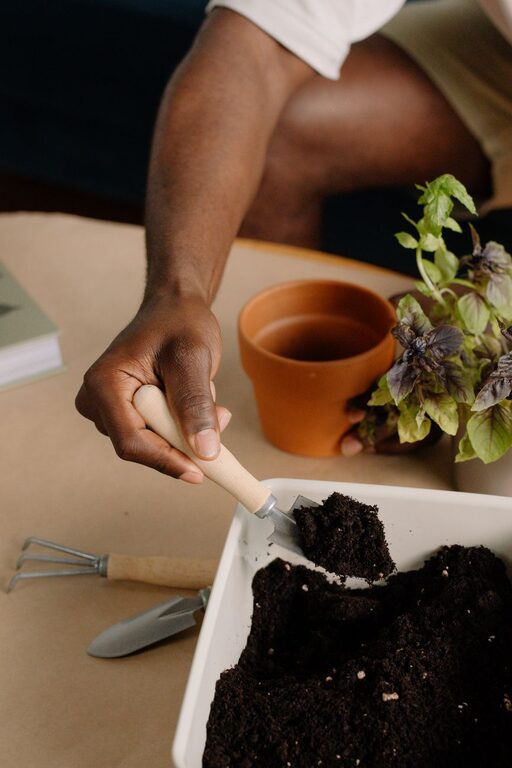
– Carefully remove the plant from its nursery container.
– Loosen roots gently if they are tightly packed.
– Plant in your container and fill gaps with soil.
– Water thoroughly.
Watering and Care Tips
– Water when the top inch of soil feels dry.
– Use room-temperature water.
– Avoid overwatering to prevent mold and root rot.
– Mist leaves occasionally if air is dry, especially in winter.
– Trim herbs regularly to encourage bushier growth and prevent legginess.
– Remove yellow or dead leaves promptly.
Fertilizing Your Herbs
Feed your herbs with a balanced, water-soluble fertilizer diluted to half strength once a month. Herbs don’t need heavy feeding; too much fertilizer can reduce flavor.
Troubleshooting Common Problems
– Yellowing leaves: Usually a sign of overwatering.
– Leggy plants: Indicates insufficient light.
– Wilting: Could be underwatering or root issues.
– Pests: Look for small insects like aphids; wipe leaves with mild soapy water.
Harvesting Your Herbs
Harvest herbs regularly by pinching or cutting just above a leaf node (where leaves join the stem). This encourages new growth. Avoid removing more than one-third of the plant at once.
Additional Tips for Success
– Group plants with similar needs together.
– Use saucers under pots to catch excess water.
– Clean your containers periodically to prevent disease.
– Consider growing herbs in a small indoor garden box if you want a more compact setup.
Conclusion
Starting a small herb garden indoors is a fun and practical project that anyone can enjoy. By choosing the right herbs, pots, and location, and providing proper care, you’ll have fresh, aromatic herbs ready to enhance your cooking all year long. Happy gardening!
